
How to Add Emotional Pull Without Resorting to Hype
Let’s start with a truth that makes a lot of brand teams nervous:
If your copy never creates tension, it’s probably not doing its job.
Now, I’m not talking about drama-for-clicks, shouting-in-all-caps, “Are you tired of being broke, burned out, and ____?” kind of tension. That’s just hype, and your audience sees right through it.
But if your content always plays it safe — if it explains, informs, and outlines without ever tapping into desire, discomfort, or curiosity, then it’s not pulling its weight.
And your audience isn’t feeling it.
When There’s No Tension, Theres No Pull
Copy without tension often sounds like this:
- “Our solution is easy to use and helps you grow.”
- “We offer seamless integrations and expert support.”
- “We believe in clarity, connection, and customer care.”
It’s technically fine. It’s also forgettable.
There’s so much noise in the world today that you content needs more clarity. It needs emotional gravity. It needs to create a subtle sense of stretch, a gap between what is and what could be. That’s tension. And it’s the emotional heartbeat of persuasive writing.
What Is Tension, Really?
Tension lives in the space between:
- A current frustration and a future solution
- A belief someone’s been clinging to and a truth they’re ready to hear
- A feeling they haven’t named yet, and your copy puts it into words
Tension isn’t manipulative. It’s connective. It says:
- I see where you are. I know what that feels like. and I think you’re ready for something else.
It creates forward energy in your reader. And forward energy leads to action.
The 4 Emotional Levers of Brand-Safe Tension
Let’s name the specific types of tension you can use, especially is you want to stay grounded, values-aligned, and hype-free.
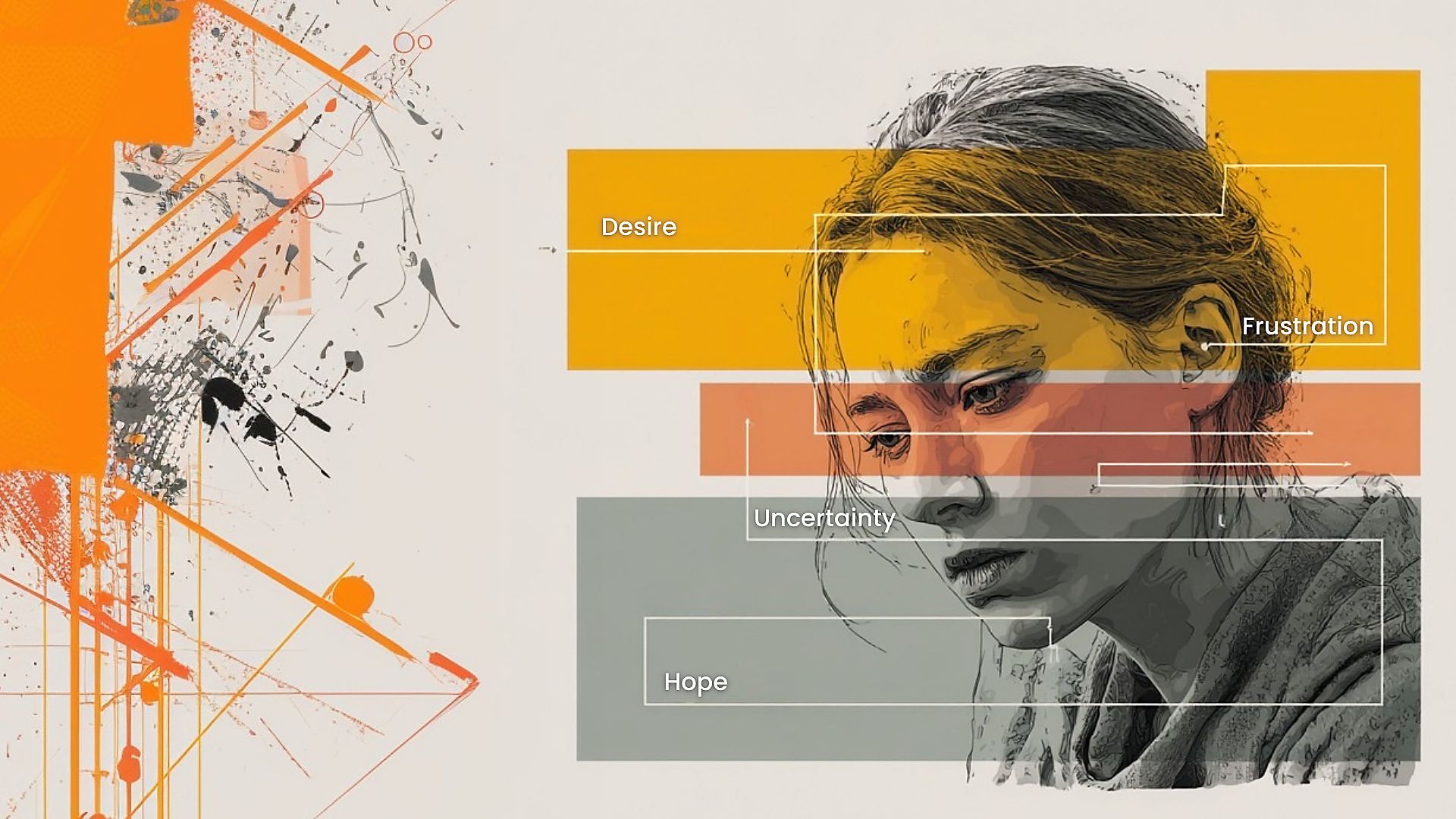
1. Desire
Show what they want, but maybe haven’t admitted yet.
Example: “You’ve outgrown the DIY stage. Now what?”
2. Frustration
Name what’s not working without shaming them.
Example: “You’ve tried all the templates. It’s still not sounding like your brand.”
3. Uncertainty
Speak to the quiet doubts that keep them stuck.
Example: “You’re not even sure what you’d say if someone asked what makes you different.”
4. Hope
Paint a possibility that feels both exciting and achievable.
Example: “Imagine handing your brand message to your team and watching them run with it.”
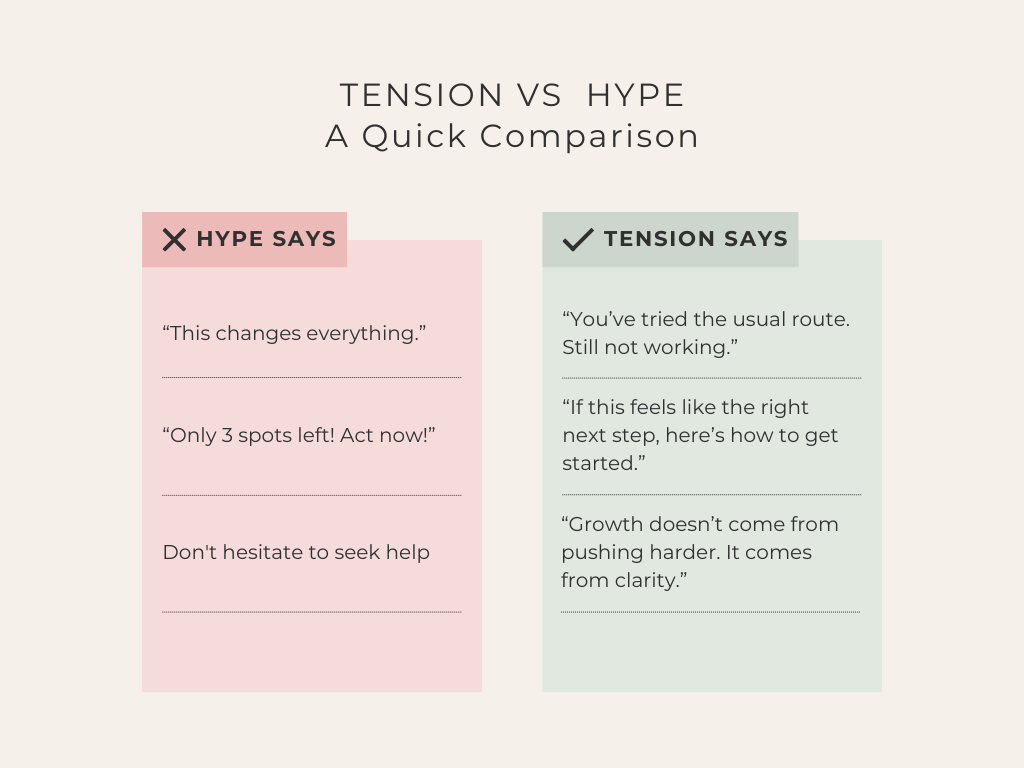
How to Add Emotional Tension Without Compromising Your Brand
Here’s the good news: you probably already have strong, clear messaging. To add tension, you don’t need to change your values, you just need to ask deeper questions:
- What’s at stake if they stay where they are?
- What’s the deeper need behind the surface problem?
- What false beliefs or outdated assumptions can you help unravel?
Then, in your actual copy:
- Start with the reader’s current feeling, not your feature set
- Create contrast between “now” and “after”
- Use open loops or curiosity (“There’s a reason your message isn’t landing, and it’s not your delivery.”)
Sprinkle these moments in. Let them build. Think of tension not as pressure but as pulse.
Bottom Line: It’s Not About the Right Words, It’s About Real Feelings.
If your brand wants to connect in a deeper way, tension is one of your best tools. And not the shouty, stressy kind. The honest, human kind.
The kind that says:
“We get it. And we can help.”
Want help finding the emotional pulse in your message?
Ii work with marketing leads and brand teasm to shap copy that connects: with clarity, nuance, and a little backbone.
Schedule a call and let’s see what magic we can make.